The Rise of Logomania in Y2K Fashion
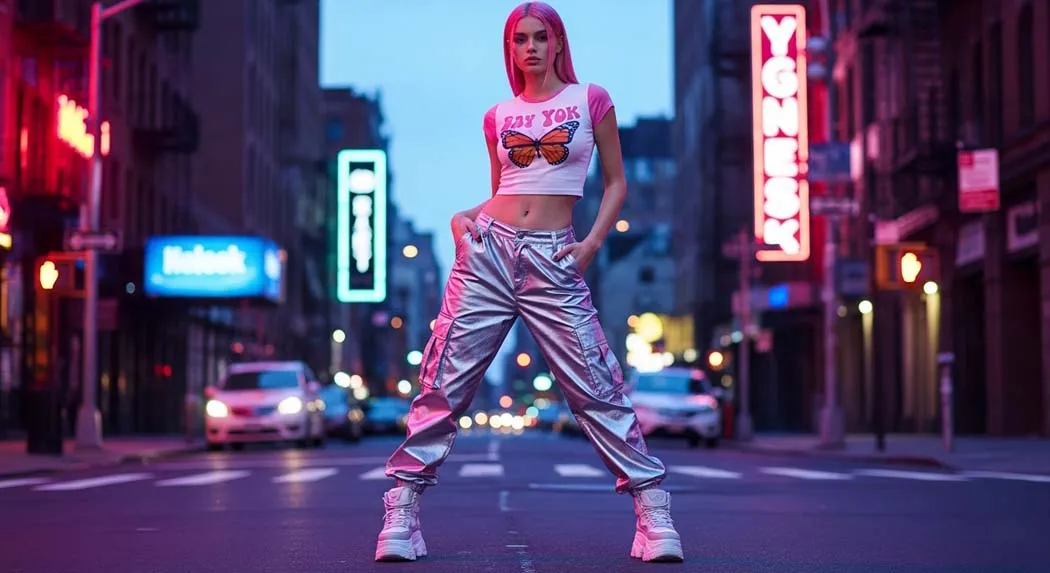
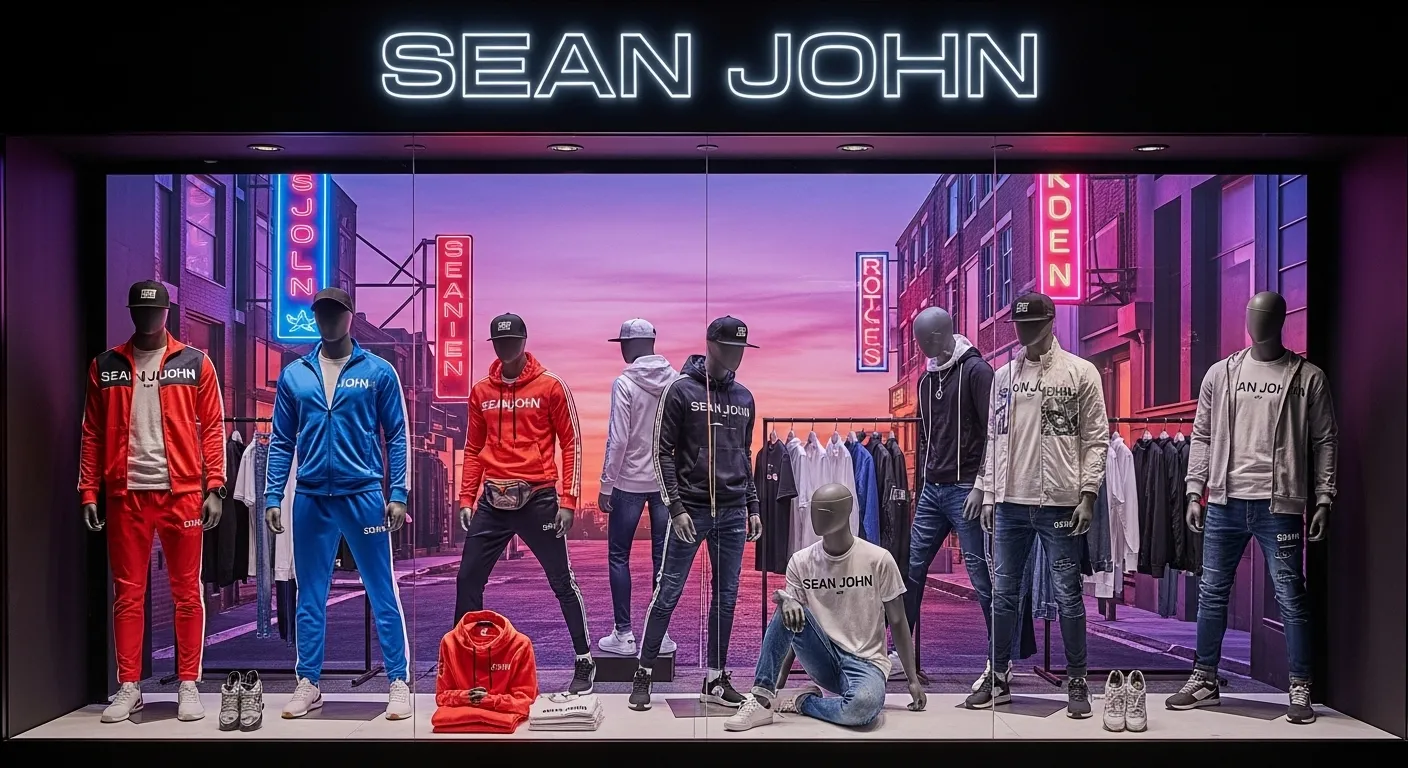
Logomania — the trend of wearing clothing and accessories covered in bold designer logos — was one of the defining aesthetics of the Y2K era. From head-to-toe logo prints to oversized embellished brand names, the early 2000s celebrated conspicuous consumption through fashion like never before. Logomania was more than just a trend; it was a cultural statement about status, identity, and belonging, often paired with baby tees and denim jackets that themselves bore prominent branding.
The rise of logomania coincided with the explosion of hip-hop fashion into the mainstream and the celebrity-ification of fashion designers. Suddenly, wearing a logo wasn’t just about showing you could afford the item — it was about aligning yourself with a particular lifestyle, music scene, or celebrity. Brands like Fendi, Gucci, Louis Vuitton, and Von Dutch became household names thanks to their ubiquitous logo prints gracing everything from purse charms to trucker hats.
The Von Dutch Phenomenon
No brand embodied Y2K logomania quite like Von Dutch. The trucker hat brand exploded in popularity after celebrities like Britney Spears, Ashton Kutcher, and Justin Timberlake were photographed wearing the signature winged-eye logo caps. What started as a niche trucker hat brand became a multi-million dollar empire almost overnight, driven entirely by logo recognition. The Von Dutch trucker hat — often in pink, black, or white with the bold logo across the front — became the accessory of the early 2000s.
Designer Logo Prints That Defined the Era
Each major fashion house had its signature logo print that became a status symbol during the Y2K years. These prints were instantly recognizable and often faked by street vendors, which only added to their cultural ubiquity.
Fendi Zucca Print
The Fendi Zucca print — the famous brown and black FF pattern — was everywhere during the early 2000s. From iconic handbags to headbands and bikinis, the Zucca print was the ultimate flex for the fashion-conscious Y2K woman. Celebrities like Sarah Jessica Parker and Paris Hilton helped catapult Fendi bags into must-have status, with the Baguette bag becoming one of the most famous logo accessories in fashion history.
Louis Vuitton Monogram
The Louis Vuitton Monogram canvas — with its interlocking LV and floral motifs — has been a status symbol since the 19th century, but it reached new heights of popularity during the Y2K era. The brand’s collaboration with artist Takashi Murakami in 2003 produced the iconic Multicolore Monogram, which replaced the traditional brown logo with bright, playful colors on a white or black background. This collection became an instant sensation and defined luxury logomania for a generation.
Gucci GG Canvas
Gucci’s GG Supreme canvas experienced a massive revival in the late 1990s and early 2000s under Tom Ford’s creative direction. The double-G logo appeared on everything from horsebit loafers to Jackie bags to bikini tops. Gucci logomania was particularly popular in the hip-hop community, where the brand’s horsebit logo was seen as the ultimate status symbol. The brand’s resurgence was documented in music videos, red carpets, and paparazzi shots of celebrities leaving nightclubs.
Streetwear Logomania: From Supreme to Baby Phat
Logomania wasn’t limited to high fashion. Streetwear brands equally embraced bold branding, creating a parallel universe of logo-driven fashion that spoke to different communities.
Baby Phat and FUBU
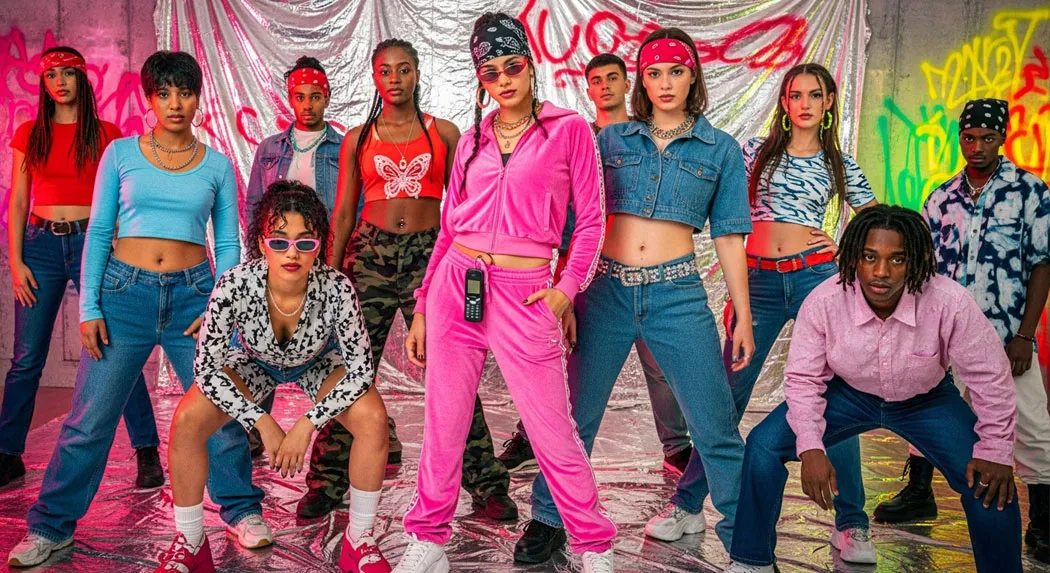
Baby Phat, founded by Kimora Lee Simmons in 1999, became one of the most recognizable logo brands in Y2K streetwear. The cat logo appeared on velour tracksuits, denim jeans, and t-shirts, often bedazzled and in bright colors. Similarly, FUBU’s bold logo appealed to a generation that wanted to represent their cultural pride through fashion. These brands proved that logomania could be accessible and aspirational simultaneously.
The Rise of Supreme
While Supreme started in 1994, it was during the early 2000s that the brand’s red box logo became a streetwear phenomenon. The logo’s simple boldness made it instantly recognizable and highly desirable. The brand built a culture around limited drops and scarcity, making their logo pieces status symbols in their own right. This model would eventually influence how every streetwear brand approached branding in the decades to come.
DIY Logomania: Faux and Custom Logo Fashion
Not everyone could afford authentic designer logo pieces, so DIY culture embraced logomania in creative ways. Bedazzling brand names onto plain t-shirts, creating faux Gucci and Fendi pieces with fabric paint, and buying counterfeit goods from street vendors were all common ways to participate in the trend. This DIY approach to logomania reflected the Y2K spirit of playful self-expression that defined other trends like bedazzling and customizing clothing.
Modern Logomania Revival
The Y2K revival has brought logomania back with a vengeance. Gen Z has embraced vintage logo pieces from thrift stores and online resale platforms, while brands have reissued iconic logo prints to capitalize on nostalgia. The Fendi Zucca print has seen a massive resurgence, and Louis Vuitton’s collaboration with Supreme in 2017 blended two eras of logomania into one collection. Babydoll tops, mini skirts, and hair accessories with prominent logos are once again dominating fashion feeds on social media.
Conclusion
Y2K logomania was more than just a fashion trend — it was a cultural movement that reflected the era’s values of status, self-expression, and the blurring lines between high fashion and streetwear. Whether you were sporting a Von Dutch trucker hat, a Fendi Baguette, or a DIY bedazzled logo tee, wearing your brand on your sleeve was a declaration of identity. Today’s revival of logomania proves that the urge to wear our allegiances — and our aspirations — on our clothing is as strong as ever.
\uD83D\uDCEB Subscribe for More Y2K Style!
Get the latest Y2K fashion tips straight to your inbox.