90s Alternative Fashion: The Ultimate Guide to 1990s Grunge, Goth & Punk Style
The 1990s was a golden era for self-expression, and 90s alternative fashion was at the heart of it. While mainstream trends came and went, the underground ruled — grunge exploded out of Seattle basements, goth reached its commercial peak, punk evolved into new forms, and skaters created a laid-back aesthetic that still dominates streetwear today. Each subculture gave us distinct visual language: ripped denim, velvet chokers, band tees, platform boots, fishnets, and safety pins worn with attitude. This guide breaks down every major 90s alternative fashion movement so you can build an authentic 2026 wardrobe rooted in the most creatively rebellious decade of the 20th century.
The Rise of 90s Alternative Fashion
To understand 90s alternative fashion, you have to understand the cultural forces behind it. The early 90s recession created a generation that rejected 80s excess. Flannel and ripped jeans weren’t just style — they were statements against consumerism. MTV brought underground music into living rooms worldwide, and suddenly teenagers everywhere knew what kids in Seattle and London were wearing. Alternative became mainstream without losing its edge.
The eras saw cross-pollination between subcultures. Goths borrowed from punk’s DIY ethos. Grunge borrowed from goth’s love of dark layers. Skaters pulled from hip-hop’s baggy silhouettes. For a deeper look at the individuals who defined this hybrid approach, check out our coverage of 90s fashion icons.
Grunge: Flannel, Doc Martens, and Seattle’s Gift to Fashion
Grunge is arguably the most influential 90s alternative fashion movement of them all. Born in the Pacific Northwest rock scene, it rejected everything polished. The look was intentionally anti-fashion — thrifted flannel shirts, faded band t-shirts, ripped straight-leg jeans, and scuffed Dr. Martens boots. What started as a practical uniform for Seattle musicians became a global phenomenon after Nirvana’s Nevermind dropped in 1991.
The Kurt Cobain Effect
Kurt Cobain was grunge’s reluctant style icon. He wore cardigans from thrift stores, faded denim, and Converse with holes in them. He layered a floral dress over ripped jeans on MTV Unplugged and made it cool. Courtney Love matched his energy with her “kinderwhore” aesthetic: babydoll dresses, smudged lipstick, and crushed velvet.
Key pieces: A red-and-black flannel shirt (Pendleton if you want authenticity), a faded band t-shirt (Nirvana, Soundgarden, or Hole), straight-leg ripped jeans in light wash, Dr. Martens 1460 boots in cherry red or black, and an oversized thrifted cardigan. For the full breakdown, visit our 90s grunge aesthetic guide.
Key Grunge Silhouettes
The grunge silhouette was deliberately shapeless. Layering was key: a band tee under a flannel under a denim jacket or cardigan. Skirts were worn over jeans. Everything was at least one size too big. Hair was greasy and center-parted. Makeup was minimal or deliberately smudged. The goal was to look like you grabbed whatever was on the floor of a thrift store.
Goth: Dark Romance and Victorian Influence
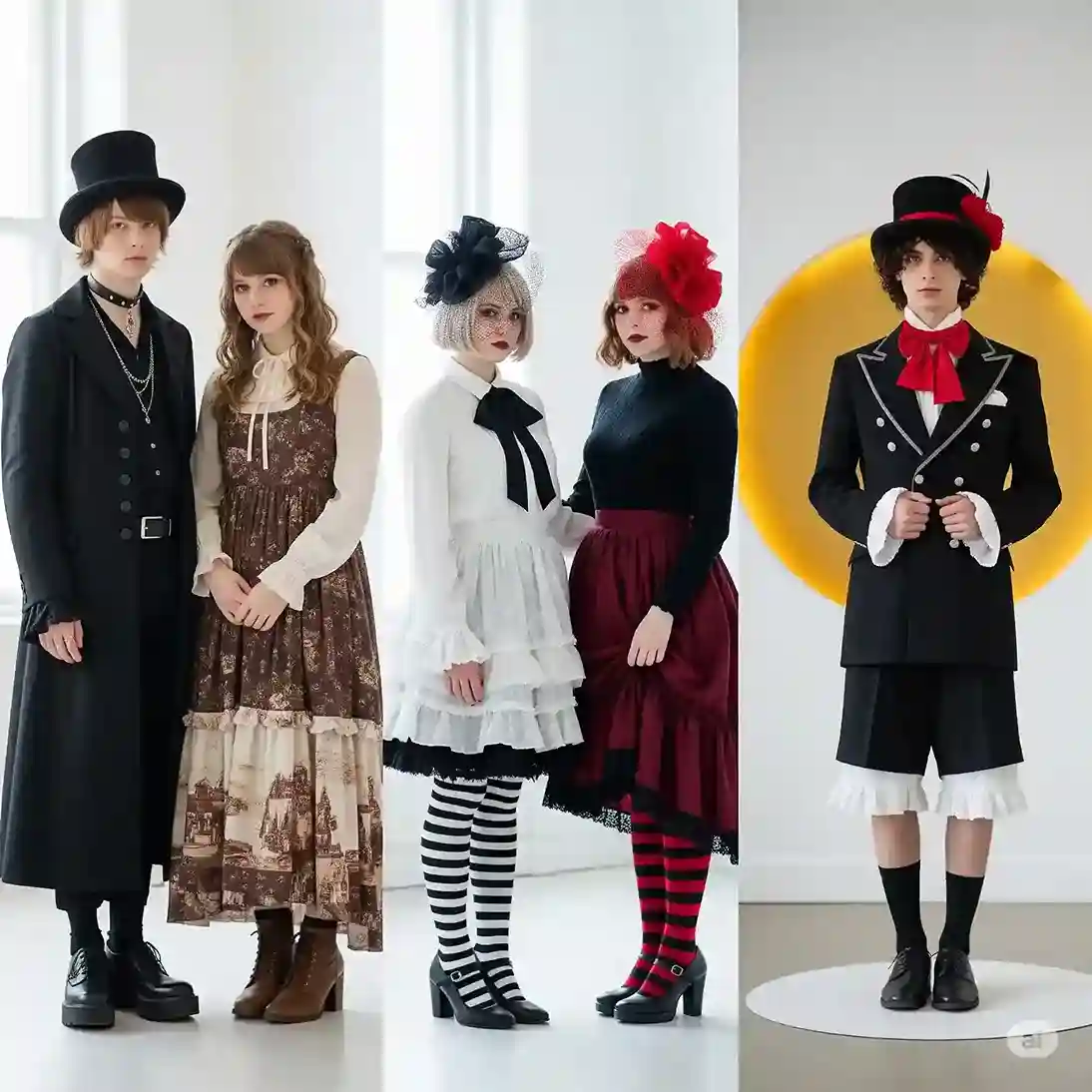
Goth reached its commercial peak in the 1990s, and the 90s alternative fashion scene owes a huge debt to its theatrical sensibility. Bands like The Cure, Sisters of Mercy, and Nine Inch Nails brought dark, romantic visuals to MTV, and a generation responded by draping themselves in black velvet, lace, and leather.
The Mid-to-Late 90s Goth Explosion
By the mid-90s, goth had splintered into sub-genres. Trad goth kept Siouxsie Sioux’s dramatic eyeliner aesthetic alive. Cyber goth embraced neon hair and PVC. Vampire goth brought velvet coats and ruffled collars, thanks partly to Interview with the Vampire. The common thread was an embrace of the dark and dramatic. Goth was 90s alternative fashion at its most intentional — every accessory was a conscious choice.
Key pieces: A black velvet slip dress or maxi skirt, a long black duster coat, fishnet tights, chunky platform boots (Demonia or New Rock), lace gloves, and silver jewelry including ankh pendants and chain necklaces. Makeup was essential: pale foundation, heavy black eyeliner, dark lipstick in black or deep burgundy.
The Goth-Punk Crossover
Goth and punk shared a love of DIY customization. The hybrid look combined punk’s aggression with goth’s romance: a band t-shirt under a lace-trimmed corset, combat boots with velvet skirts, spiked collars with rosary beads. This crossover remains one of the most enduring looks in 90s alternative fashion.
The Deathrock Influence
Deathrock kept the DIY punk spirit alive through the 90s with a horror-inspired aesthetic: torn fishnets, bleached black hair, horror movie band tees, and bullet belts. This rawer style directly inspired the “dark streetwear” trend of the 2020s.
Punk: Raw, Political, and DIY
Punk found new energy as 90s alternative fashion evolved. The scene was split between traditionalists who kept the 70s Ramones look alive and new waves of pop punks and street punks who updated the aesthetic.
Pop Punk Goes Mainstream
Bands like Green Day, Blink-182, and The Offspring brought punk to the mainstream in the mid-90s. The pop punk look was cleaner: bleached blonde hair, hoodies, skinny ties, Dickies pants, Vans sneakers, and band tees. It was 90s alternative fashion for the mall crowd — rebellious enough to feel edgy but approachable for suburban teens.
Key pieces: A denim vest covered in patches and pins, band t-shirts (Ramones, Misfits, Dead Kennedys), slim-fit Dickies work pants or bleached jeans, a leather biker jacket, studded belts and wristbands, and Vans Old Skool sneakers with a chain wallet.
Street Punk and Crust
On the harder edge, street punk and crust punk maintained an aggressive look. Bullet belts, patched denim jackets, combat boots, and liberty spikes or mohawks were standard. Patches bore messages about animal rights, anti-fascism, and social justice. Every jacket told a story. This was 90s alternative fashion as protest.
DIY Customization
What united all punk fashion was the DIY ethos. You didn’t buy punk clothes — you made them. You cut up band tees and resewed them. You added studs to a thrifted jacket. You wrote band names on your jeans with fabric marker. This handmade quality gives 90s punk fashion its authenticity, unlike today’s mass-produced “punk-inspired” fast fashion.
Skater Style and Street-Level Alternative Fashion
Skate culture produced one of the most enduring looks in 90s alternative fashion. Skater style was built around function: loose clothing for movement, durable shoes for grip tape, and a laid-back, anti-authoritarian attitude.
The Skater Uniform
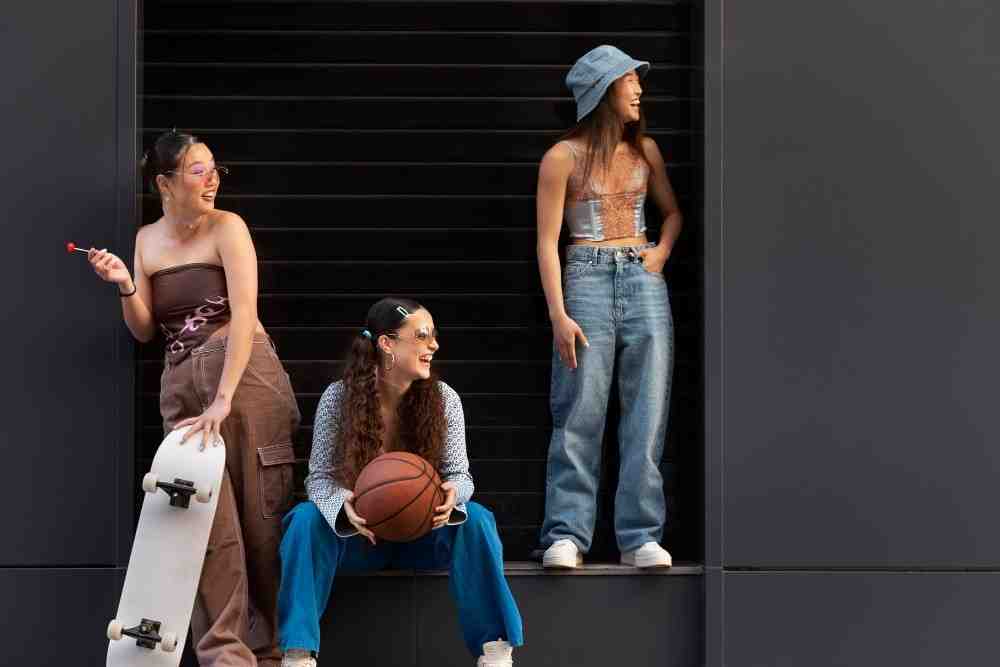
Baggy jeans or cargo pants in black or khaki, a graphic t-shirt from a skate brand (Santa Cruz, Powell-Peralta, World Industries) or a band, a hoodie, and skate shoes like Vans Old Skool. Beanies were worn year-round. Trucker hats became popular later. The aesthetic was 90s alternative fashion without pretension — comfort and durability first.
Key pieces: Baggy cargo pants in black or camo, a graphic hoodie, Vans Old Skool or Era sneakers, a bucket hat or beanie, oversized graphic tees from skate brands, and a nylon windbreaker.
Skate Brands That Defined the Decade
Brands like Element, Zero, Shorty’s, and Toy Machine became style signifiers. Wearing a Zero hoodie told other skaters you knew the scene. The graphics — skeletons, monsters, cartoon characters — were designed by artists like Ed Templeton and Marc McKee. These brands influenced 90s alternative fashion well beyond the skate park.
Conclusion: The Enduring Power of 90s Alternative Fashion
What made 90s alternative fashion special was its authenticity. These weren’t trends manufactured by fashion houses — they were uniforms born from music scenes, political movements, and subcultures that believed in something. Grunge rejected consumerism. Goth embraced theatrical self-expression. Punk demanded action. Skater style valued function over fashion.
Today in 2026, the influence is everywhere. Runway designers borrow grunge layering and goth romance. Streetwear brands use skater silhouettes. Pop stars wear punk accessories on stage. The key to getting it right is understanding the history behind the clothes. Don’t just wear a flannel — understand why Kurt Cobain wore his.
Ready to build your 90s alternative wardrobe? Start with one subculture and invest in its key pieces. Mix elements from different scenes to create your own hybrid style. Browse our collection of vintage-inspired 90s alternative fashion at Y2KFashionNova.com. For more inspiration, explore our guides on 90s grunge aesthetic, 90s hip hop fashion, and 90s fashion icons.
\uD83D\uDCEB Subscribe for More Y2K Style!
Get the latest Y2K fashion tips straight to your inbox.