The Backstreet Boys were the defining boy band of the 1990s, selling over 100 million records worldwide and creating a fan phenomenon that rivaled Beatlemania. From their matching outfits to their perfectly choreographed dance moves, the Backstreet Boys embodied everything fans loved about 90s pop music. This guide explores their rise to fame, fashion legacy, and lasting influence on pop culture.
The Rise of the Backstreet Boys
The Backstreet Boys formed in Orlando, Florida in 1993, bringing together five young men with complementary vocal styles and undeniable charisma. The original lineup — AJ McLean, Howie Dorough, Nick Carter, Kevin Richardson, and Brian Littrell — was assembled by Lou Pearlman, who would later also create ’N Sync.
The group’s self-titled debut album, released internationally in 1996 and in the US in 1997, made them international stars. Hits like “Quit Playing Games (With My Heart),” “As Long As You Love Me,” and “Everybody (Backstreet’s Back)” dominated radio and MTV, turning the band into a global phenomenon. Their sophomore album “Millennium” (1999) took their popularity to even greater heights, selling over 1.1 million copies in its first week alone.
The Backstreet Boys’ Fashion Legacy
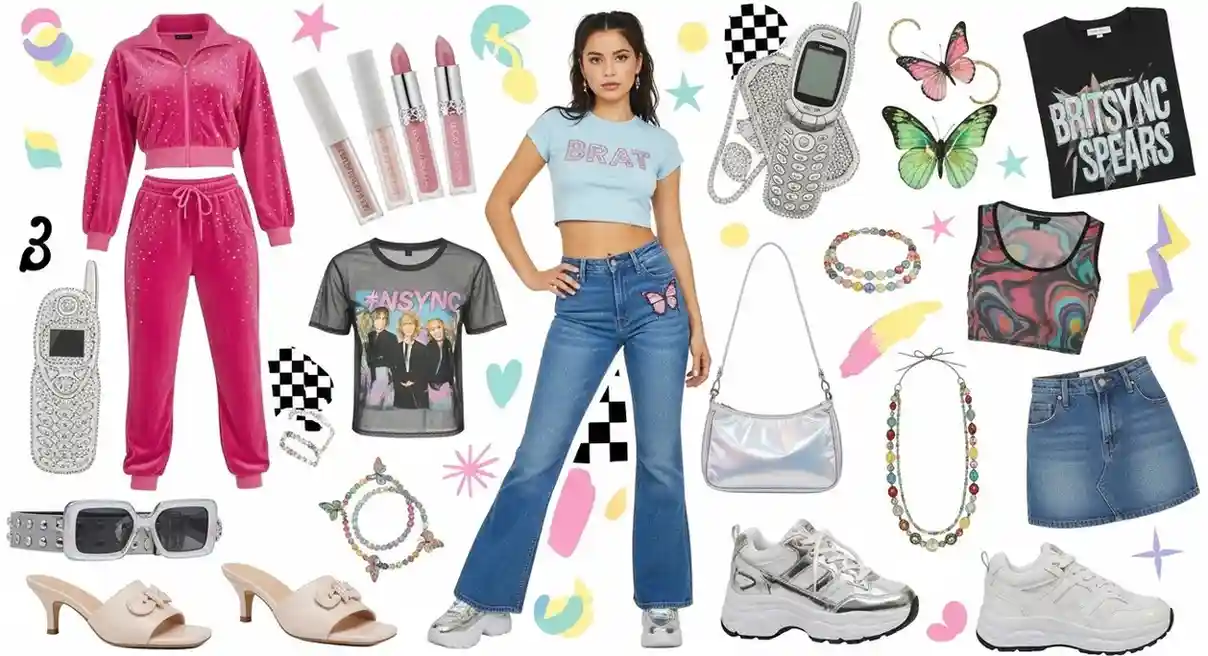
The Backstreet Boys were as famous for their fashion as they were for their music, particularly their coordinated outfits that became a signature of 90s boy band style. Their fashion evolved significantly throughout the 90s, reflecting changes in pop culture and their own artistic development.
The Early Years (1995-1997): Matching Outfits
In their early career, the Backstreet Boys wore coordinated outfits in what became known as the “boy band uniform.” Matching button-down shirts, vests, and trousers were standard for performances and photoshoots. These coordinated looks emphasized unity and created a visually striking stage presence that became the blueprint for boy band fashion throughout the decade.
The Millennium Era (1999-2000): Individualized Style
By the time “Millennium” was released, each member had developed his own distinct fashion identity. Nick Carter went for the heartthrob look with open shirts and exposed chest, AJ McLean embraced a darker, edgier aesthetic with bandanas and leather, while Howie, Kevin, and Brian opted for more sophisticated, mature styles. This individualization reflected the growing maturity of the group and their fanbase.
The Black & Blue Era (2000-2001): Coordinated Cool
The “Black & Blue” era saw the Backstreet Boys adopt a more coordinated but edgier look. Black clothing, leather accents, and matching color schemes became their signature, reflecting the album’s darker, more R&B-influenced sound. This era marked the peak of their fashion influence, with fans around the world copying their looks.
Iconic Backstreet Boys Fashion Moments
The Backstreet Boys created countless memorable fashion moments that defined 90s pop style. Their matching white outfits at the 1999 MTV Video Music Awards remains one of the most iconic boy band fashion statements in history. The coordinated red and black looks from the “Larger Than Life” music video became the visual identity of the “Millennium” era. Their streetwear-inspired looks in the “I Want It That Way” video captured the casual cool that made them accessible to fans worldwide. Their 2001 Grammy Awards appearance in coordinated black suits showed their evolution into mature artists.
The Backstreet Boys’ Influence on Boy Band Fashion
The Backstreet Boys set the template for boy band fashion that groups like ’N Sync, 98 Degrees, and O-Town would follow throughout the late 90s and early 2000s. Their emphasis on coordinated but individualized style created a formula that allowed each member to maintain his own identity while presenting a unified group image. This approach to group fashion became the standard for pop groups throughout the Y2K era.
Lasting Legacy
The Backstreet Boys continue to perform and record music today, and their influence on pop culture remains significant. The current Y2K revival has introduced their music and fashion to a new generation, with vintage Backstreet Boys merchandise becoming highly collectible. Their matching outfits from the 90s are celebrated in retrospectives, and their fashion evolution is studied as a blueprint for pop group styling.
Conclusion
The Backstreet Boys were more than just a boy band; they were a cultural phenomenon that defined 90s pop music and fashion. Their coordinated looks, evolving style, and lasting influence make them an essential part of Y2K fashion history. Whether you were a devoted fan in the 90s or are discovering their legacy through the current revival, the Backstreet Boys remain the ultimate example of boy band style and success.
\uD83D\uDCEB Subscribe for More Y2K Style!
Get the latest Y2K fashion tips straight to your inbox.