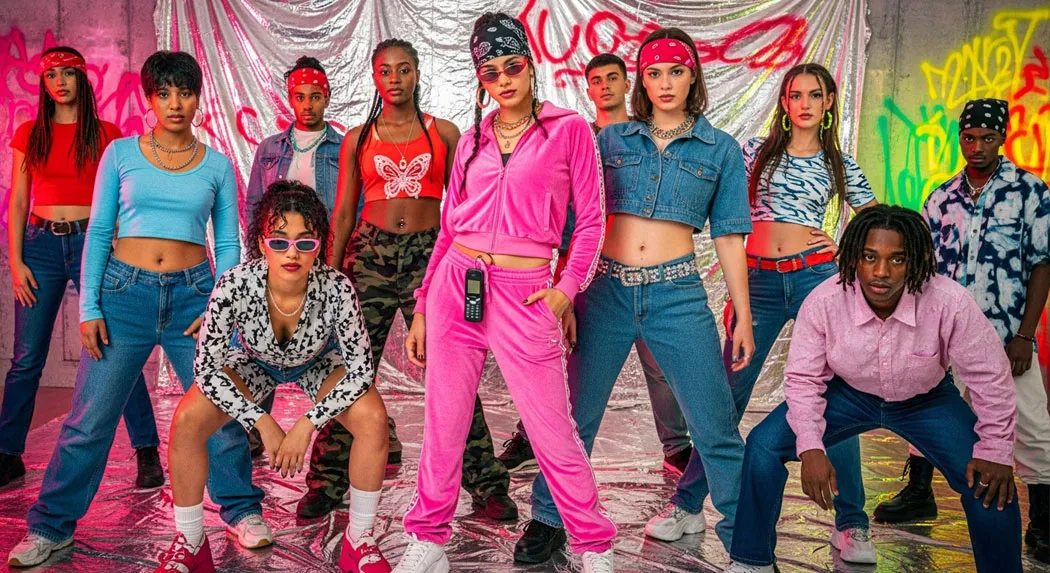
The 90s music icons style wasn’t just about the music — it was a full cultural movement that spilled onto the streets, runways, and into the closets of millions. From the raw energy of hip-hop to the angsty flannel of grunge and the dazzling reinvention of pop, the 1990s gave us fashion icons whose influence is still shaping what we wear today. In this guide, we break down the signature looks of four legends — Tupac Shakur, The Notorious B.I.G., Kurt Cobain, and Madonna — and show you how their style defined a decade.
The Rise of 90s Music Icons Style in Fashion History
The 1990s marked a turning point where musicians became as famous for what they wore as what they sang. Unlike the excessive 80s, the 90s brought a mix of rebellion, luxury, and raw authenticity. 90s hip hop fashion took over the mainstream, while grunge rejected it entirely. Pop stars like Madonna kept pushing boundaries, proving that reinvention was the ultimate fashion statement.
What made the 90s music icons style so powerful was its accessibility. You didn’t need a designer budget to dress like Kurt Cobain — you just needed a thrift store. At the same time, Tupac and Biggie showed that hip-hop could be both street and奢 luxurious. This blend of high and low, polished and raw, defined the era and continues to inspire modern fashion cycles today.
Tupac Shakur: The Street Poet of Hip-Hop Fashion
Tupac Amaru Shakur was more than a rapper — he was a style icon whose look mirrored his complex personality. His 90s music icons style blended street grit with high-end sophistication, creating a template that hip-hop fashion still follows.
The Bandana and Do-Rag
Tupac’s signature accessory was the bandana, often tied around his head with a knot at the front. He popularized the do-rag as a fashion statement, turning a practical hair accessory into a cultural symbol. Whether black, red, or patterned, the bandana became shorthand for West Coast hip-hop attitude.
Leather Vests and Bandannas
One of Tupac’s most iconic looks was the leather vest worn over a bare chest, paired with baggy jeans and Timberland boots. This look — rugged yet deliberate — embodied the duality of his persona: the thug and the thinker. He often layered gold chains and pendants (including his famous cross) over the vest for added impact.
Baggy Jeans and Timberlands
Tupac helped cement baggy denim and Timberland boots as essential elements of 90s fashion icons wardrobes. His jeans were loose but not overly sagging, paired with crisp white tees or flannel shirts tied around the waist. The Timberland boot — especially the classic 6-inch wheat nubuck — became a staple of East and West Coast hip-hop alike.
Gold Chains and Nose Rings
Tupac’s jewelry game was unmatched. Thick gold rope chains, medallions, and a signature nose ring completed many of his looks. This wasn’t just flash — it was a declaration of success and cultural pride. The gold chain remains one of the most enduring symbols of 90s hip-hop fashion.
The Notorious B.I.G.: Biggie’s Luxe Street Style
Christopher Wallace, aka The Notorious B.I.G., brought a larger-than-life presence to 90s music icons style. Where Tupac was raw and revolutionary, Biggie was smooth and luxurious. His fashion choices reflected his rise from Brooklyn streets to the top of the charts.
Coogi Sweaters
No item is more synonymous with Biggie than the Coogi sweater. These Australian-made, multicolored knit sweaters with their distinctive textured patterns became Biggie’s trademark. He wore them oversized and unbuttoned over white tees, turning a niche knitwear brand into a global hip-hop uniform. Coogi sweaters remain one of the most sought-after vintage pieces today.
Versace Shirts and Designer Silks
Biggie loved designer prints, especially Versace. His silk shirts with Baroque patterns, worn unbuttoned to reveal his gold chains, defined the “mafioso rap” aesthetic. He brought high fashion into hip-hop in a way that felt authentic, not borrowed. This blend of street and luxury paved the way for today’s hip-hop fashion landscape.
Fitted Hats and Kangols
Biggie’s headwear was as iconic as his music. The Kangol hat — particularly the Bermuda Casual style — became his signature, often paired with sunglasses and a Coogi sweater. Fitted baseball caps, often in Brooklyn Nets colors, were another staple. His hat game was simple but unforgettable.
The Crown and Jesus Piece
Biggie’s Jesus piece pendant and his custom crown (worn in the “Hypnotize” music video) became symbols of his reign. The Jesus piece — a large gold or diamond pendant of Jesus Christ — became a defining accessory in 90s hip-hop, still worn by artists today as a nod to Biggie’s influence.
Kurt Cobain: The Reluctant King of Grunge Style
Kurt Cobain didn’t try to be a fashion icon — and that’s exactly what made him one. His 90s music icons style was anti-fashion, rooted in thrift store finds, worn-out fabrics, and a deliberate disregard for polish. The grunge movement he fronted became one of the most influential fashion subcultures of the decade.
Flannel Shirts
The flannel shirt is the undisputed uniform of grunge, and no one wore it better than Cobain. He often tied flannels around his waist, wore them open over band tees, or layered them under cardigans. The look was messy, comfortable, and deeply authentic. Flannel became the uniform of a generation that rejected the excess of the 80s.
Ripped Jeans and Converse
Cobain’s jeans were almost always ripped, frayed, and dirty — a visual middle finger to fashion norms. He paired them with Converse All-Stars (often scuffed and worn) or combat boots. This thrift-store aesthetic became the cornerstone of 90s band t-shirts and grunge style, influencing brands like Dr. Martens and Vans.
Cardigans and Grandma Sweaters
One of Cobain’s most surprising contributions to fashion was bringing back the cardigan. He wore oversized, often-stained grandpa cardigans on stage and in music videos like “Smells Like Teen Spirit.” This choice — deliberately uncool — became incredibly cool, sparking a trend for vintage knitwear that persists today.
Sunglasses as Armor
Cobain frequently wore cheap, tinted sunglasses — often indoors. They weren’t a fashion statement in the traditional sense but a shield. The look was copied by millions, turning everyday drugstore sunglasses into a grunge essential. His overall aesthetic proved that the best style comes from not trying at all.
Madonna: The Chameleon of Pop Fashion
Madonna reinvented herself more times in the 90s than most artists do in a lifetime. Her 90s music icons style journey took her from the raunchy “Blond Ambition” era to the ethereal “Ray of Light” period, each phase leaving a permanent mark on fashion.
The Cone Bra and Jean Paul Gaultier
Madonna’s 1990 Blond Ambition Tour introduced the world to the cone bra, designed by Jean Paul Gaultier. This corset-like bodysuit with conical cups was provocative, theatrical, and utterly iconic. It blurred the line between performance costume and fashion and is still referenced on runways and red carpets today.
Cyberspace and “Ray of Light” Aesthetic
By the late 90s, Madonna had traded corsets for futuristic minimalism. The “Ray of Light” era (1998) brought sleek black hair, minimal makeup, flowing skirts, and techwear-inspired pieces. This look mirrored the Y2K aesthetic that was just beginning to emerge, blending spirituality with technology.
The Cowboy Hat Phase
Madonna’s “Don’t Tell Me” music video (2000) showcased yet another transformation: cowboy chic. With a Stetson hat, denim, and Western boots, she proved her ability to absorb and elevate any subculture. This phase influenced the early-2000s Western trend seen in collections from Dior to Ralph Lauren.
Layering and Rosary Beads
Madonna popularized the layering of crucifixes and rosary beads as fashion accessories in the late 80s and early 90s. While controversial at the time, this practice normalized jewelry layering and the mixing of religious iconography with street style. It also opened the door for the choker and layered necklace trends that dominated Y2K fashion.
How 90s Music Icons Style Still Influences Fashion Today
The 90s music icons style isn’t just a nostalgia trip — it’s a living influence. Every season, designers pull from the archives of Tupac, Biggie, Cobain, and Madonna. The baggy jean revival, the return of logomania, the dominance of vintage band tees, and the resurgence of corsets all trace back to these four icons.
Modern artists like Travis Scott (channeling Tupac’s bandana-and-boot energy), Tyler the Creator (Biggie’s preppy-luxe blend), Billie Eilish (Cobain’s oversized anti-fashion), and Dua Lipa (Madonna’s chameleon approach) all carry the torch. The 90s proved that musicians aren’t just entertainers — they’re the most powerful fashion influencers in the world.
Conclusion: The Lasting Legacy of 90s Fashion Icons
From Tupac’s bandanas and leather vests to Biggie’s Coogi sweaters and crowns, from Cobain’s flannels and cardigans to Madonna’s cone bras and henna tattoos — the 90s music icons style was as diverse as the music itself. These four artists didn’t just wear clothes; they told stories, challenged norms, and built visual legacies that outlive them.
Whether you’re layering gold chains over a white tee or throwing on a thrifted flannel over a band shirt, you’re participating in a tradition these icons started. The 90s may be over, but the style — and the attitude — is forever. Explore our guides on 90s hip hop fashion and 90s fashion icons for more vintage style inspiration.
\uD83D\uDCEB Subscribe for More Y2K Style!
Get the latest Y2K fashion tips straight to your inbox.